Friday, March 29, 2013

Neither Pink nor Perfect: Muddy and Mighty Middle Grade Girls

My eight year old daughter is always filthy.

Her coat, her boots, even fingernails seem to be dirt-magnets. She comes home from school in her mis-matched clothes (picked out by her self of course), with her face flushed and her ponytails crooked or falling out. And I have to stop myself from obsessing. Most of the time I fail, bemoaning,

“Why is your coat dirty again?” “Yuck, go wash your hands,” or “Those boots are NOT getting into my car!”

The funny thing is, she’s not a particularly sporty girl — not someone who would be called (if you use this sort of anachronism) a ‘tomboy.’ Rather, she happens to go to a school where children are allowed to be children. Where she builds fairy houses out of moss and sticks at recess, brews ‘witches potions’ out of mud and leaves, run around and does cartwheels. These are all things I believe are good, and important for both girls and boys. And when my son comes home in the same filthy state, my first reaction is to say “Well, looks like you’ve been playing hard.” Yet, my instinctual reaction is not always the same for my daughter.

So, I’ve been thinking a lot lately about our cultural expectations for girls to be clean. Not just clean, but prim, proper, quiet, well behaved and well presented. And I’m realizing it’s part and parcel of the ‘pinkification’ of girlhood – what Peggy Orenstein wrote about in her book, Cinderella Ate My Daughter: Dispatches from the Front Lines of the New Girlie Girl Culture. Now, don’t get me wrong, as a pediatrician/mom/writer, I’m certainly not recommending we don’t wash hands before meals or skip showers. But there is already such a psychological pressure on young girls to interact with the world and present their bodies in certain ways — ways that have to do with cultural expectations for female sexuality, not a hearty, healthy and body-loving girlhood (or womanhood!). These expectations of perfection aren’t just unrealistic, they’re potentially damaging of self esteem and psychological as well as physical well being, as Courtney E. Martin asserts in her groundbreaking Perfect Girls, Starving Daughters: How the Quest for Perfection is Harming Young Women.

Yet, there is a cultural pushback happening. Consider that in 2012 Maine eighth grader Julia Bluhm circulated a petition asking Seventeen Magazine to stop Photoshopping and airbrushing images of models, arguing that photographs of perfect skin, hair, and rail thin bodies were unhealthy for young people’s self-esteem. Her petition gained national media attention, and even inspired a protest in front of Seventeen’s offices. Pro-body image websites like Adios, Barbie  urge young women to join the ‘body loving revolution.’ Other sites including Princess-Free Zone and A Mighty Girl do everything from posting parenting articles, to making lists of ‘independent princesses’ in media and books, to selling empowering clothing, including superhero undies, for ‘smart, confident and courageous’ girls.

And of course, there’s always the world of middle grade books! I mean, who can forget the fantabulous role model of Astrid Lindgren’s Pippi Longstocking, the ultimate brave-hearted, strong, adventurous, horizontal braided, mis-matched stocking wearing middle grade heroine? Part of Pippi’s appeal (and Lindgren’s ‘before her time’ genius), in fact, is her ability to shirk feminine conventions, arm-wrestle grown men, rescue animals, climb roofs and out-smart dastardly pirates.

To read the rest of this essay please visit From the Mixed Up Files of Middle Grade Authors

Monday, March 4, 2013

Bridget Jones Made Me Do It! Does Chick Lit Negatively Influence Women's Body Image?


bridget-jones-the-edge-of-reason

I read a fascinating piece in The Guardian UK recently, with an even more fascinating headline: “Chick lit ‘harms body image’, study finds.” At first glance, this seems highly plausible. Just the name ‘chick lit’ implies something at least intellectually (if not psychologically) unsavory. We are women, not poultry!, the feminist in me wants to clamor. And certainly, I myself have written about the potential impact of young adult (YA) literature on girl’s self-image. Despite my abhorrence of anything that even sounds like book banning, I’ve also allowed myself to wonder if full-of-detail descriptions of anorexia, like Laurie Halsie Anderson’s Wintergirls could be used as a book of tips for young people already struggling with eating disorders.

And yet, there is a difference between wondering if a single well-written novel – when read without support and in isolation – could be (mis)used by a young person already struggling with body image issues, and if an entire genre of literature can actively ‘harm body image’ in an entire gender of people. Doesn’t attributing such a wide reaching condemnation of not one book but an entire type of fiction smack of 19th century condemnations of the novel itself? Ideas that suggested that the weak minds of women, in particular, were somehow more prone to ‘hysterical’ flights of fancy after reading novels? (The classic example of this kind of ‘imagination gone awry due to reading’ is found in Jane Austen’s Northanger Abbey, in which young Catherine Morland, a Gothic novel aficionado, imagines all sort of horrible murders and other happenings due entirely to her ‘reading too much.’)
So, can reading chick lit make modern women have bad body image? Can Bridget Jones (who is soon to have a third sequel) be blamed for our gender’s collective bad self-esteem due to her calorie counting and cigarette-alcohol binging? Or Georgia Nicolson and her fabity-fab-fab boy crazy ways be at the root of some kind of global heteronormative downfall?

Well, let’s go back to the study itself, shall we? Mmm? The abstract of the Virginia Tech study, published in The Journal of Body Image reads:


To read the rest of this essay, please visit Adios, Barbie

Tuesday, January 8, 2013

Two Tragedies and a Rising of Social Justice Consciousness

My recent trip to India was marked by two horrific tragedies: one in my home country and another in the country of my family origins.

There is very little seemingly in common with a brutal gang rape in New Delhi and an elementary school killing in Connecticut. Except that both have ignited the hearts and minds of citizens around the world toward the work of peace and social justice. And that in both cases, there is so much to do.

There has been much written lately about the brutal gang rape, torture, and eventual death of a 23-year old college student in New Delhi, India.

There have been smart analyses from within the subcontinent and the South Asian diaspora of rape culture and gender violence in the Indian context,  rigid definitions of masculinity, femininity and heteronormativity, of how this one young woman's death has brought back into the light of memory so many other women's lives.

What else can be said? How can I give adequate words to such anguish and anger, outrage and grief?

Today, in reading this interview of Eve Ensler    regarding the New Delhi rape and subsequent protests, I was initially nervous. I worried if the well known American feminist would take the tack of 'looking Eastward with disgust' - pointing to Indian patriarchy or Indian contexts as being somehow 'more' enabling of gender violence.

But instead, Ensler took the path of solidarity. When asked about how Indian culture might specifically play into rape culture, Ensler replied:


That will be a wrong approach. I think there is patriarchy, and there is humanity, and there is pressure. Rape, harassment, incest, dowry, and even bringing up girls as less as significant to men, are all things not particular to India. The issue at hand may manifest itself a little different culturally here and there. But there is a global patriarchy that is controlled by the methodology of violence. Which is essentially this mindset that women are less, women are not equal, they are to be controlled, their sexuality is to be contained, their life forces are to be dampened, they are to be kept down so that men can have power. I see this mindset in every country I go to.


She goes on to call the mass protests and outrage in Delhi following the rape a "part of the rising." And despite denigration of the protesters by Indian politicians as 'dented and painted women', or even more legitimate critique of how this particular rape - and not thousands of others -- ignited the outrage of India's rising elite upper middle class   , what is profoundly true about the public outrage in India is how it has awakened South Asia, the diaspora, and the world to issues of gender violence.

As Ensler so rightly says, the task now is channeling this energy and outrage into ongoing, thoughtful, and socially just work. 

And while the situations are by no means alike, I do wonder if gun control protests in this country can equally be considered part of the worldwide "rising" for peace and social justice. And if not, how can we make them so? How can we turn the unacceptable and horrific deaths of our young people -- all our young people -- be it from gender violence, or the acts of a mentally ill individual with access to horrific weapons -- into action, justice and future political vision?

Perhaps these two recent tragedies have as much that differentiate them as bring them together into the light of common knowledge. But both have been devastating. And both can be awakenings.

I can't help but go back to the words of poet Rabindranath Tagore, who wrote:


Where the mind is without fear and the head is held high
Where knowledge is free
Where the world has not been broken up into fragments
By narrow domestic walls
Where words come out from the depth of truth
Where tireless striving stretches its arms towards perfection
Where the clear stream of reason has not lost its way
Into the dreary desert sand of dead habit
Where the mind is led forward by thee
Into ever-widening thought and action
Into that heaven of freedom, my Father, let my country awake.


Into that heaven of freedom, and justice, let our world -- finally --- awake.

Friday, January 4, 2013

Realistic Girls and Fantastic Boys? Middle Grade Fantasy, Realistic Fiction, and the Great Gender Divide


One of the very first books my now eight year old daughter loved was called Ruby Bridges Goes to School. Even before she could read well, she would return again and again to this slim volume, turning the pages reverently, frowning at the hateful expressions of pro-segregation racists, smiling as she contemplated the bravery of this ‘real little girl.’

At the time, I thought that perhaps it was the similarity of their ages. Ruby was an entering first grader, as was my daughter. She was a girl of color, also like my child. But Ruby lived in such a different time, and struggled against such overt, violent racism. What did my daughter find so compelling about this book, that she preferred it to most others – including bookshelves full of fairy tales and princess stories?

Now, a few years and any number of books later, my big reader eight year old still gravitates to fiction and nonfiction exploring the lives of ‘real little girls.’ Unlike her older brother, who launched quickly from early chapter books into fantasy series like Harry Potter, Percy Jackson, Artemis Fowl, Septimus Heap, and the like, my daughter craves stories about realistic girl protagonists. I was at first a bit flabbergasted at her lack of attraction for fantasy – a genre her mother and brother both adore. In fact, my current middle grade novel is a fantasy adventure based on Indian folk-tales, and starring, you guessed it, a middle grade girl protagonist. So why doesn’t my daughter enjoy the genre I so love?

As a parent, pediatrician, and feminist activist, I’ve always struggled against the notion that there even is such a thing as a ‘girl book’ or a ‘boy book.’ In fact, my beliefs had been seemingly verified out by my son, who as readily consumes male protagonist fantasy as he does more ‘realistic’ stories with girl main characters such as the Ramona books or Little House on the Prairie series.

Yet, there is clearly a message being sent. And it’s through the eyes of my daughter that I am finally able to see it. With the notable exception of Harry Potter’s Hermione (whom my daughter loves), there are few central female characters in middle grade fantasy novels. If literature is a mirror – an opportunity to show children a reflection of their own lives and their own experiences (or approximations of their own lives and own experiences), then what is happening for my daughter is obvious. While she was able to see herself even in the struggles of a girl who lived in such a different time, like Ruby Bridges, she is unable to see herself in most of the the fantasy novels that populate the bookshelves in her house.

Even the names of each of her brother’s favorite series send out the message loud and clear – fantasy is a boy’s genre. Or at least a genre dominated by boy protagonists. And it’s certainly not because women aren’t writing fantasy. As this blog entitled Finding Female in Middle Grade Fantasy notes:
 
“Even fantasy books written by women have mostly male protagonists: Rowan of Rin by Emily Rhodda, Dragon Rider by Cornelia Funke, The Spiderwick Chronicles by Holly Black, Septimus Heap by Angie Sage, and The Unnamables by Ellen Booream. And among those books with females heroines, most are paired alongside boy heroes, such as A Series of Unfortunate Events by Lemony Snickett, Fablehaven by Brandon Mull, Rick Riordan’s The Kane Chronicles, and of course, Rowling’s Harry Potter.

To read the rest of this essay, please visit From the Mixed Up Files of Middle Grade Authors!

Monday, November 19, 2012

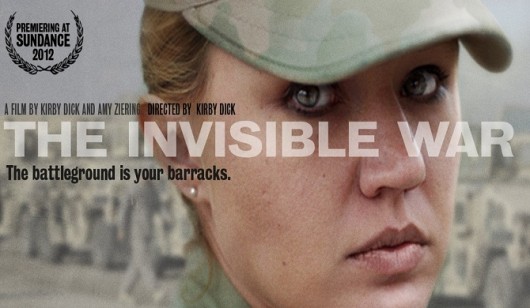
The Invisible War: Sexual Assault in the Military


A female soldier shows the two items she always carries on her body: a cross and a hunting knife.
“You always have protection with Jesus,” she says, “but sometimes you need just a little bit more.”
Similarly, another female soldier explains, “[My] knife wasn’t for the Iraqis… it was for the guys on my own side.”

For this year’s Veterans Day, I wanted to acknowledge the efforts of women soldiers. More than any time before in history, women are serving in the armed forces. According to 2007 estimates, women made up 15 percent of active duty forces in the Iraq War, four times more than in the 1991 Gulf War.
And while many women have happily served in the U.S. armed forces, forging noteworthy careers in service to their country, it is also estimated that over 20 percent of female veterans have been sexually assaulted during their service. And it is quite possible the real figures are much higher.
Sexual assault of fellow soldiers is the U.S. military’s dirty secret. The 2012 Sundance winning film, The Invisible War, documents the rampant epidemic of sexual assault of soldiers by their own comrades, and the military’s systematic policy of covering up most such cases. The film captures the voices and experiences of women soldiers (as well as some men) in all branches of the armed services – women who were not only assaulted by those pledged to be their ‘brothers in arms’, but unable to seek justice due to the military’s internal handling of such cases. Watch the film trailer:


Over and over again, women in the film describe entering the armed services due to family tradition, dreams of honor, professional camaraderie, and public service, only to be treated as second-class citizens (“walking mattresses”) by their fellow soldiers. Women describe being harassed, ridiculed, isolated, and yes, assaulted. They describe being afraid to walk alone through their bases, afraid to go to the latrine at night, afraid to go into the room of a superior when summoned. Women describe being attacked, drugged, beaten, repeatedly raped, and then told by higher ups to “deal with it” or risk demotion, further harassment, or even facing charges themselves for everything from adultery (if their assailant was married) to conduct unbecoming an officer to court-martial. Women describe being unable to remove themselves from unsafe situations, being unable to access mental or other health services, being unable to even receive VA benefits for injuries received from their assaults.
The military’s culture of silencing and retaliating against those who report rape only exacerbates the trauma of the assault. As The Invisible War documents, many assault survivors are so traumatized, they quit the military (‘Go AWOL’), and receive dishonorable discharges – therefore disqualifying themselves from Veterans and other benefits. They may suffer more PTSD (Post-Traumatic Stress Disorder) than soldiers returning from war, becoming homeless, alcoholic, drug dependent, and, with all too much frequency, actively suicidal.

It was journalist and Columbia University journalism professor Helen Benedict who first broke this story in a 2007 Salon.com article called “The private war of women soldiers.” The article, based on interviews of 20 female Iraq war veterans, and Benedict’s subsequent book, The Lonely Soldier: The Private War of Women Serving In Iraq point to the military’s long history of covering up sexual misconduct, from the Tailhook incident in 1991 to Aberdeen in 1996. According to Benedict:
A 2003 survey of female veterans from Vietnam through the first Gulf War found that 30 percent said they were raped in the military. A 2004 study of veterans from Vietnam and all the wars since, who were seeking help for post-traumatic stress disorder, found that 71 percent of the women said they were sexually assaulted or raped while in the military. And in a third study, conducted in 1992-93 with female veterans of the Gulf War and earlier wars, 90 percent said they had been sexually harassed in the military, which means anything from being pressured for sex to being relentlessly teased and stared at.
The burning question, of course, is why? Why is there such a culture of sexual assault in the U.S. military?

As an ex-military colleague recently said to me, “In the military, your body is not your own, it is the property of the U.S. government.”

To read the rest of this essay, please visit Adios, Barbie  

Revisiting the Classics: Mother Goose and the Marks that Stories Leave

This post was part of the blog tour for Two and Twenty Dark Tales: Dark Retellings of Mother Goose Rhymes (Month 9 Books, 2012)
  

Two and Twenty Dark Tales
Edited By: Georgia McBride & Michelle Zink
Pub. Date: October 16, 2012
Publisher: Month9Books
Pages: 340
In this anthology, 20 authors explore the dark and hidden meanings behind some of the most beloved Mother Goose nursery rhymes through short story retellings. The dark twists on classic tales range from exploring whether Jack truly fell or if Jill pushed him instead to why Humpty Dumpty, fragile and alone, sat atop so high of a wall. The authors include Nina Berry, Sarwat Chadda, Leigh Fallon, Gretchen McNeil, and Suzanne Young.
There seems to be a cultural moment happening right now – when all sorts of children’s and YA books are revisiting the classics.

There are Greek mythology take-offs like Rick Riordan’s Percy Jackson series, Joan Holub and Suzanne Williams’ Goddess Girls series, and Charlotte Bennardo and Natalie Zaman’s Sirenz series. There are Grimm’s brothers take-offs like Michael Buckley’s The Sisters Grimm series.

There are Shakespearean take-offs like Michelle Ray’s Falling for Hamlet, and Jacqueline Woodson’s If You Come Softly (which I recently wrote about in an essay called “Shakespeare in Black and White.”). And don’t even get me started on the endless Austen take-offs. From Mandy Hubbard’s Prada and Prejudice to Jennifer Ziegler’s Sass and Serendipity to … well, there are a whole lot of them is my point.

But what purpose do classic revisitations serve in the popular imagination? Clearly, there is a hunger for them, and the popularly accepted idea that being introduced to take-offs will make young readers more interested in the original stories from which they originated.

And I guess I can believe that, if it comes to stories we want young people to be reading in their original, stories whose evergreen relevance we want to celebrate – like those of Shakespeare or Austen. But what about all those mythological and fairy-tale take-offs? Are those being published because we, as a culture, are really interested in our children re-reading Ovid’s myths or the original Brothers Grimm Tales? I’m not so sure. Instead, I think, such re-tellings actually reflect how ingrained those old stories already are into our individual and collective psyches.

Take the Mother Goose retellings in Two and Twenty Dark Tales: Dark Retellings of Mother Goose Rhymes, a collection edited by Georgia McBride and Michelle Zink and released in October 2012 from Month 9 Books. Earlier this year, I had the opportunity to enter a contest on YAlitchat.org to be the one “wild card” contributor to this volume. Unlike the other authors in the book, like Sarwat Chadda or Leigh Fallon, who were asked to contribute and therefore could choose the Mother Goose rhyme they wanted to revisit, I, as the contest winner, was given my task: to write a dark retelling of Little Boy Blue.

And so, I had to ask myself: why are childhood rhymes so important to us? How do they invoke so much memory and emotion, rising to the surface of our consciousness the moment they are mentioned? As I asked myself these questions, I kept mulling over the word "Blue" and suddenly thought of the Joni Mitchell Song Blue (which I listened to over and over again my first year of college on an old tape player I had, but I’m dating myself here):
 Blue, songs are like tattoos/.../Ink on a pin/Underneath the skin/An empty space to fill in                                                                                     ----Joni Mitchell, “Blue”
And so I started thinking about tattoos, ink, and if stories are one way we human beings mark ourselves. In my day job, I'm a professor of Narrative Medicine at Columbia University, so I think a lot about the power of stories and how stories work for human beings, for communities, and for societies.
To read the rest of this essay please visit Ladybug Storytime.

Wednesday, October 24, 2012

Multi-ethnic characters in children's and YA novels

courtesy microsoft office


Jacqueline Woodson’s beautiful If You Come Softly, the novel we have been reading together here at 3 Sisters Village this October, is a modern day interpretation of Shakespeare’s most famous play, a romance between an African American Romeo and a white Jewish Juliet. Simultaneously, it is an exploration of race and racism in modern day U.S. society.  (see previous posts here and here for further discussion of issues of race and representation in the novel)

At first glance, this set up -- of Black and White ‘star crossed lovers’ -- suggests a country whose racial profile is necessarily one of fixed, distinct categories. People who are Black or White, this or that.  Yet, as a country whose very President is multi- and not mono-ethnic, modern day America is increasingly a place of multiple ethnic heritages rather than singular ones.

In Woodson’s novel, it is the character of Carlton, Jeremiah’s Mercutio, who represents multi-ethnic identity. Carlton’s mother is white and father is Black, and he is the one to whom Jeremiah turns when he realizes he is falling in love with Ellie. Carlton is, in a sense, the moral touchstone to Jeremiah and Ellie’s romance, who realizes that interracial relationships “happen” and “ain’t the worst thing in the world.” (89) And although he’s a minor character, without him, the novel would suffer from a sense of racial anachronism. Carlton’s presence reminds the reader that multi-ethnic families and multi-ethnic characters are a reality in our vibrant society. And while couples like Jeremiah and Ellie may still face racist challenges from family, friends, and even strangers, they are no longer a complete anomaly in our ever-shrinking world.

And now that I’ve been looking around, I’m realizing that multi-ethnic characters are popping up everywhere in children’s and YA literature. So I thought that I would suggest a few other titles with multi-ethnic characters and call out to you, the readers, to share with us some of your favorites.

In Veera Hiranandani’s The Whole Story of Half a Girl, the primary character is Sonia Nadhamuni, a half Indian and half Jewish American girl. As the title suggests, this novel deals with multi-ethnic identity in a fairly explicit way.

Yet, in other YA novels, such as The Unbecoming of Mara Dyer by Michelle Hodkin, characters simply ‘happen to be’ multi-ethnic,

To read the rest of this essay, please visit 3 Sisters Village!